
 Posted by
 I had a ZIP file on my computer that I created a while ago. It was not a huge backup, just a small archive with some exported messages and personal files inside. The problem was simple: I could not remember the password anymore.
I tried a few passwords I usually use, but none of them worked. After several failed attempts, I stopped guessing manually and used Dr.Archive to recover the ZIP password. It supports password-protected ZIP files and gives different recovery modes, so I could search based on what I still remembered.
When You Know the ZIP Password
If you still know the password, opening a protected ZIP file is easy. Just double-click the ZIP file, enter the password when prompted, and extract the files normally. You can use Windows File Explorer, WinRAR, 7-Zip, or another archive program.
But if you forgot the password, the ZIP file will stay locked. In that case, you need a password recovery tool to find the original password.
Why I Used Dr.Archive
I did not want to upload my ZIP file to an online website because it contained personal files. I needed a local desktop tool that could recover the password on my own computer.
Dr.Archive supports GPU/CPU acceleration, and Auto mode can use available GPU devices automatically. With GPU acceleration, the speed can reach millions of password checks per second.
It also offers Dictionary Attack, Mask Attack, and Combination Attack to improve the recovery success rate when you remember some password clues. Since I remembered part of my ZIP password, I chose Mask Attack.
How to Open a Password Protected ZIP File with Dr.Archive
Step 1: Download,Install Dr.Archive and Add the ZIP File
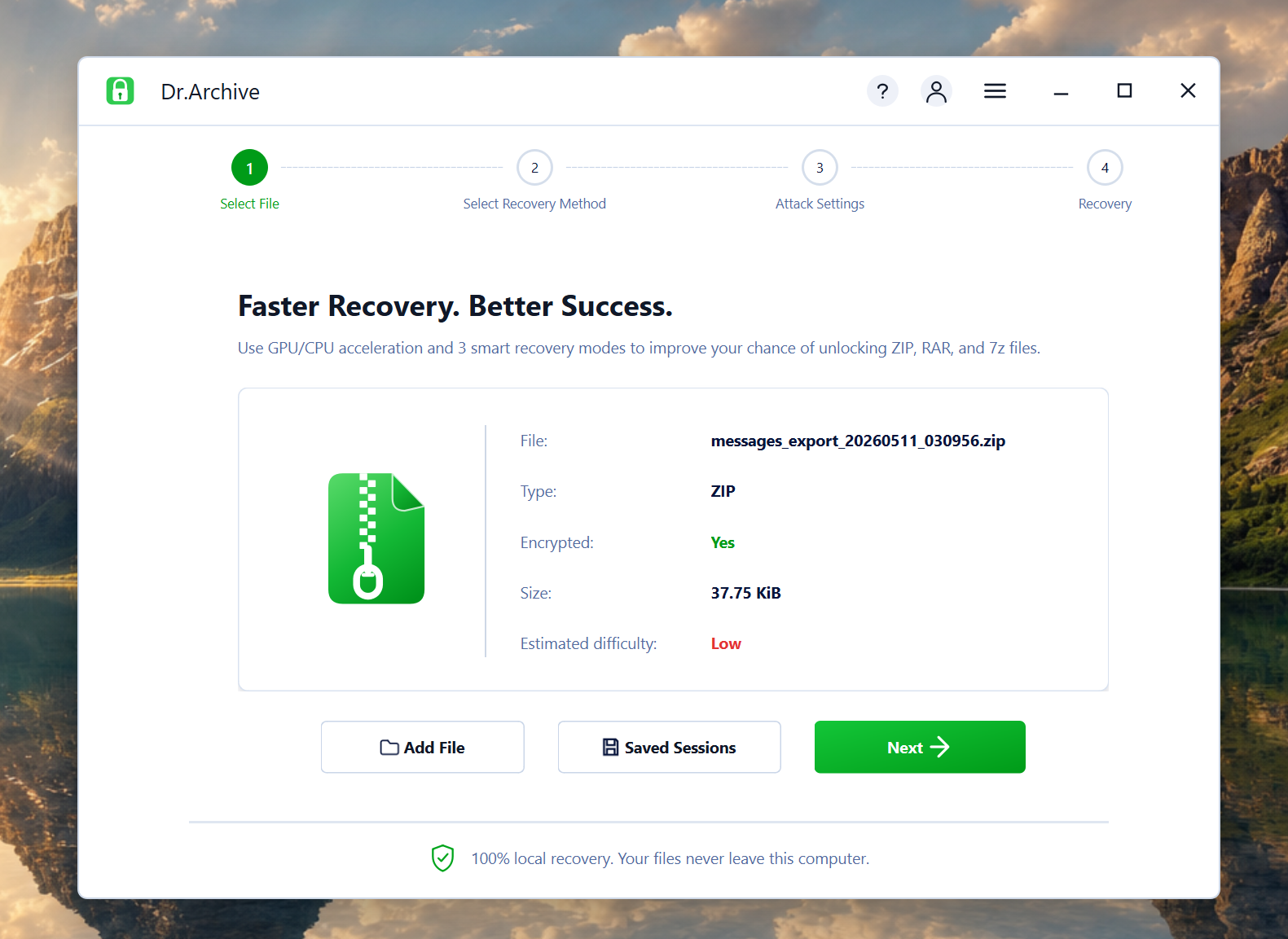
First, Download and install Dr.Archive on your computer, then opened Dr.Archive and clicked Add File. Then I selected the locked ZIP file from my computer.


After loading the file, Dr.Archive showed the file name, archive type, encryption status, size, and estimated difficulty. This helped me confirm that the ZIP file was detected correctly.
Step 2: Choose a Recovery Mode
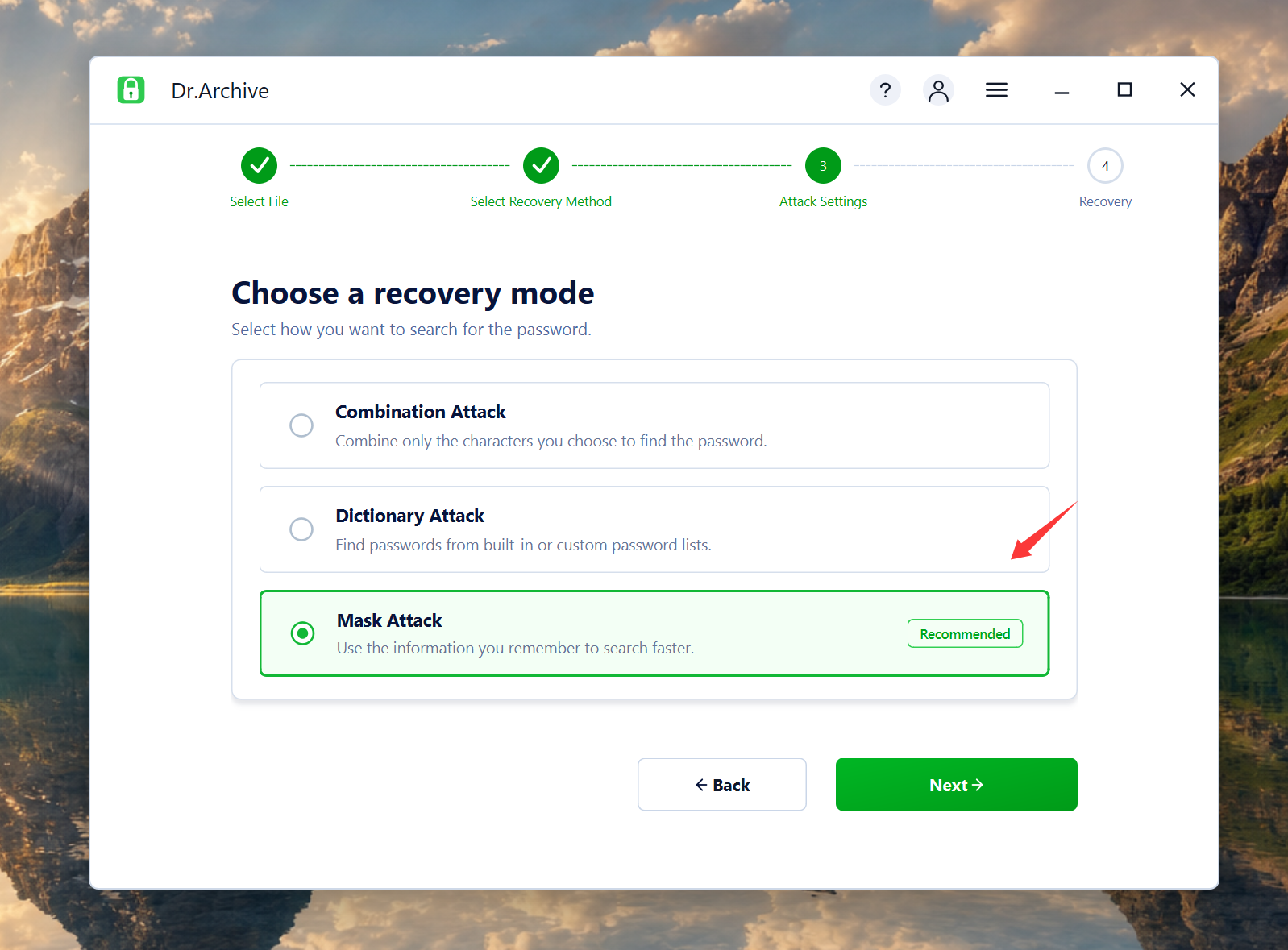
Next, I clicked Next and selected a recovery mode.
Dictionary Attack is useful if the password may come from common words or old passwords. Mask Attack is better when you remember part of the password. Combination Attack can search based on selected character combinations.
Since I remembered the beginning of my password, I selected Mask Attack.
Step 3: Enter the Password Clues
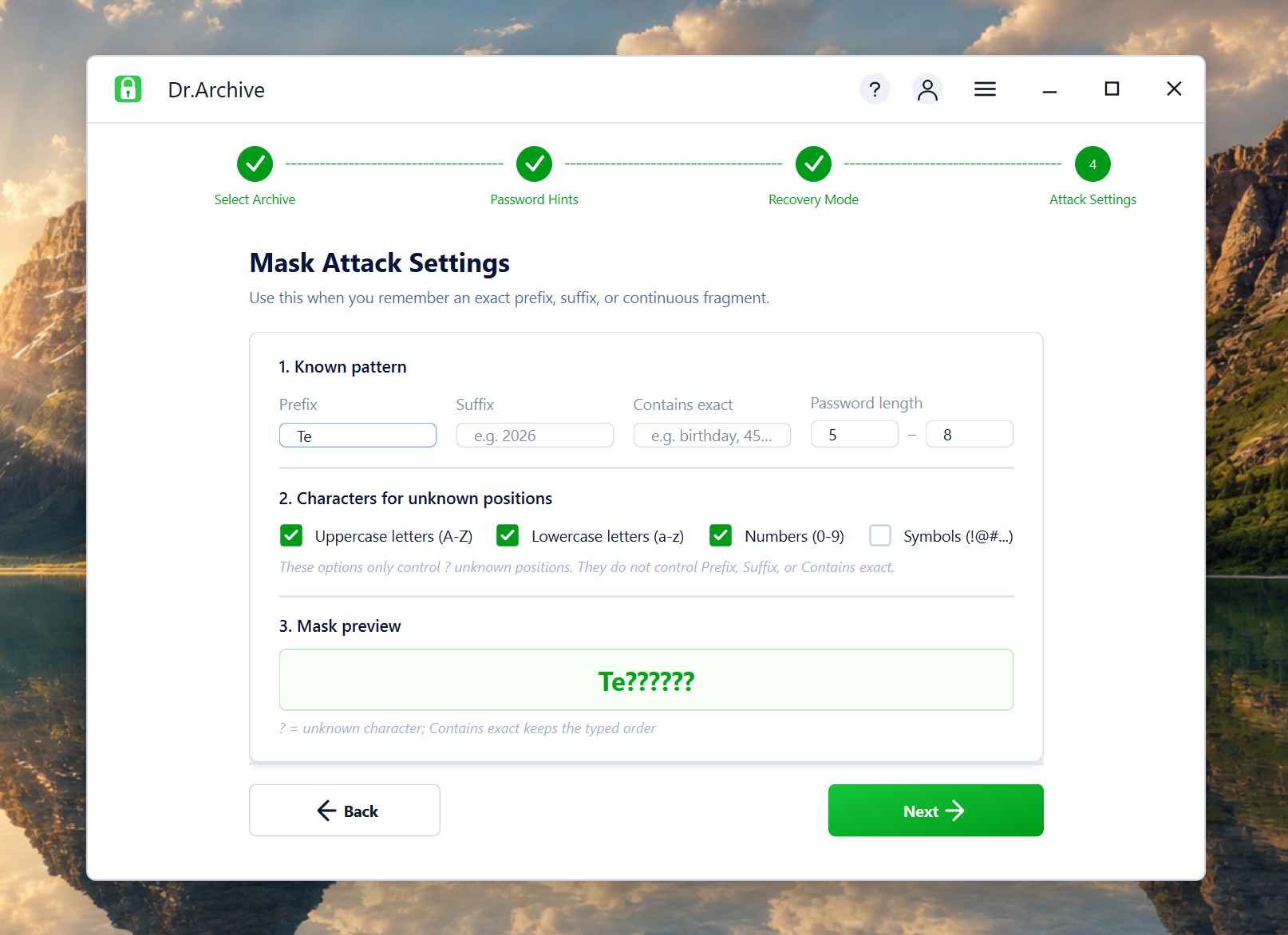
In the Mask Attack settings, I entered the password information I could remember.
For example, if the password starts with Te and is around 5 to 8 characters long, I can enter that as a known pattern. Then I select the character types, such as uppercase letters, lowercase letters, and numbers.
Dr.Archive shows a preview like this: Te?????. This makes the search much smaller than trying random passwords one by one.
Step 4: Check GPU Acceleration
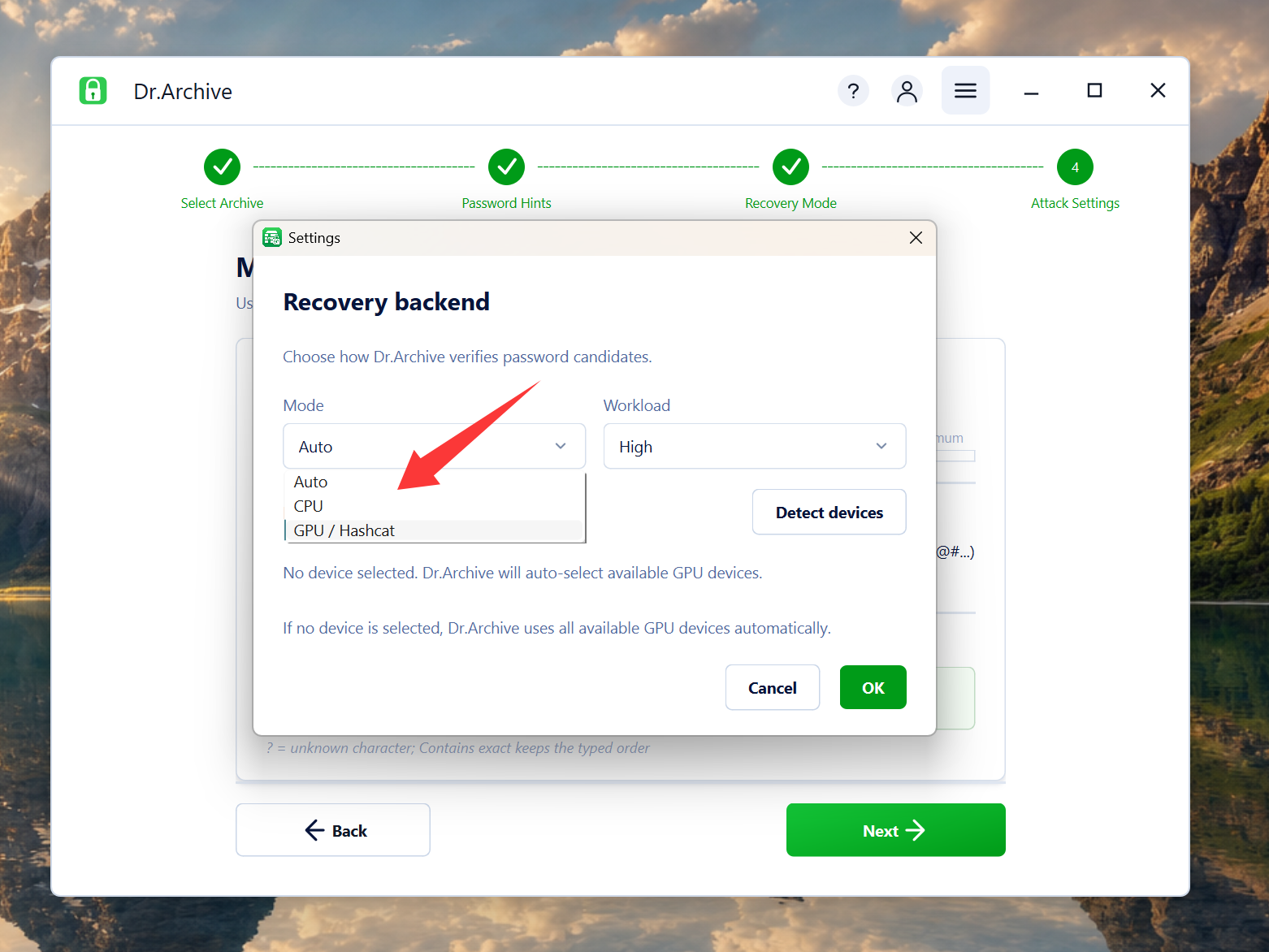
Before starting, I also checked the settings from the menu in the upper-right corner.
Dr.Archive uses Auto mode by default, so it can automatically use available GPU devices when possible. You can also choose CPU or GPU / Hashcat manually.
I kept it on Auto because it was the easiest option.
Step 5: Start the Recovery
After the settings were ready, I clicked Next to start the recovery.
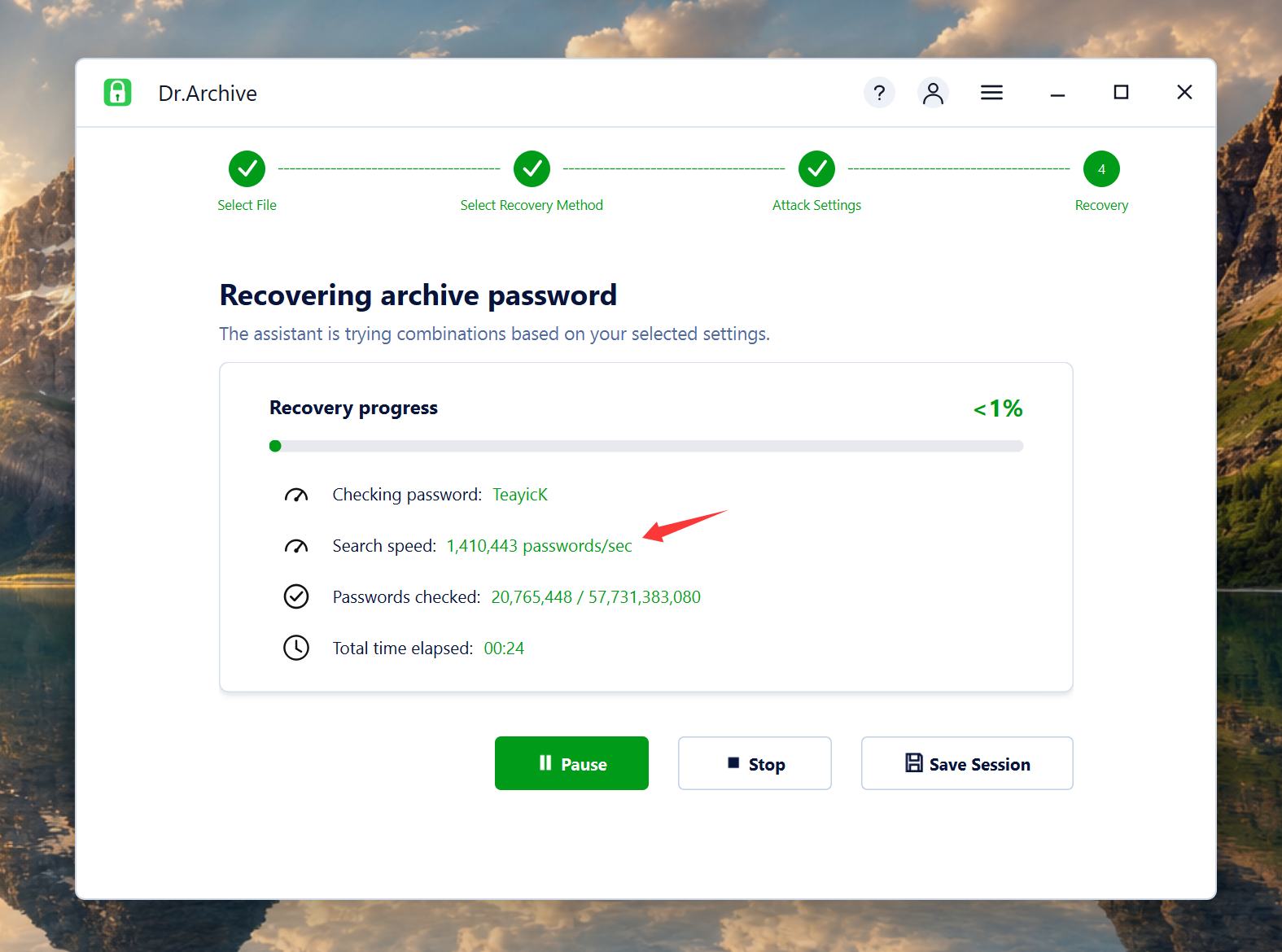
Dr.Archive began checking possible passwords based on my settings. On the recovery screen, I could see the current password being tested, search speed, checked passwords, elapsed time, and progress.
The speed depends on your computer and the password complexity. In my case, using password clues made the search more practical.
Step 6: Copy the Password and Open the ZIP File
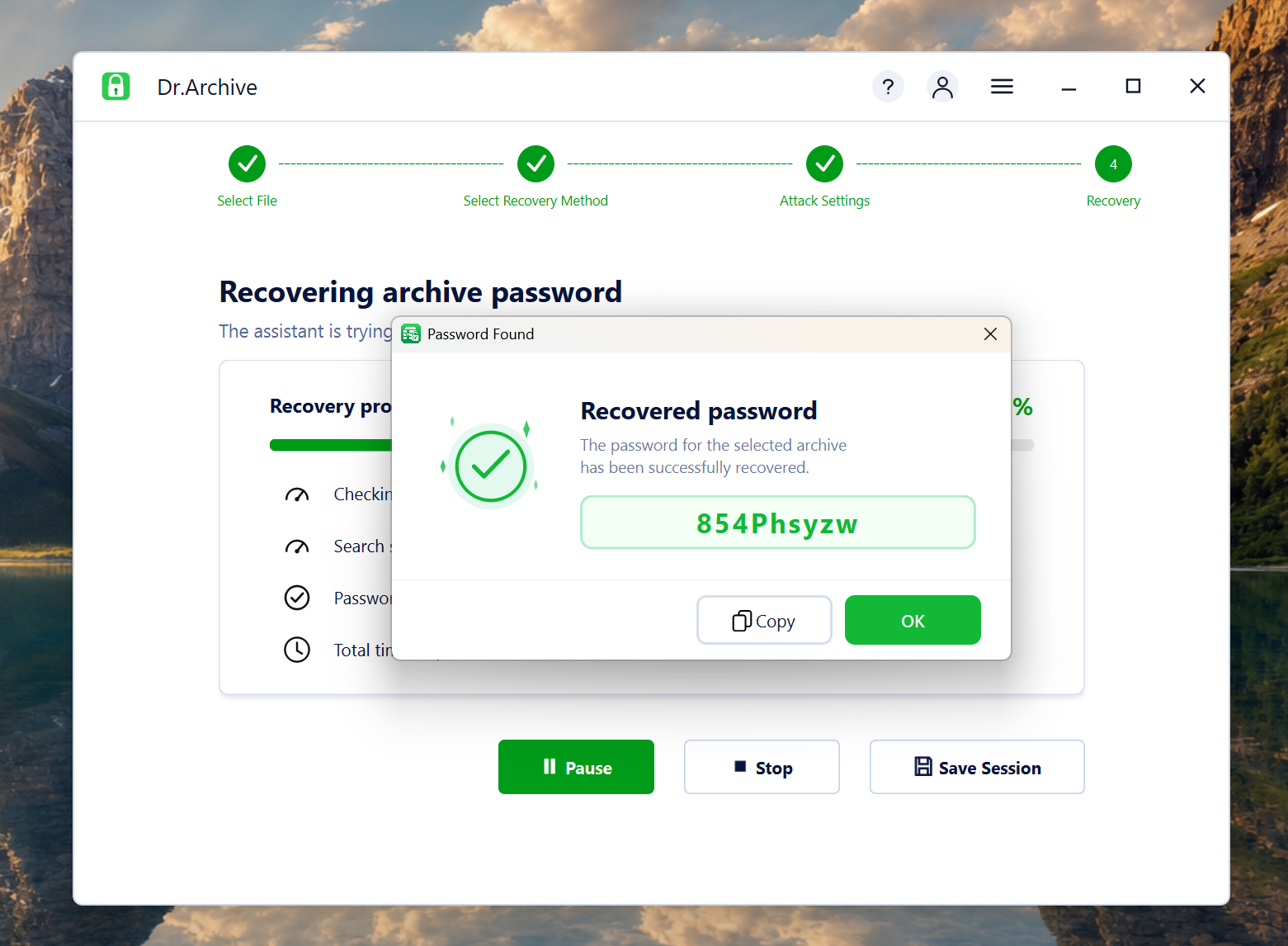
After a while, Dr.Archive found the password and showed it in a result window.
I clicked Copy, opened the ZIP file again, pasted the password, and extracted the files normally.
The ZIP file itself was not damaged. I simply used the recovered password to open it.
My Experience
What I liked most was that Dr.Archive did not make the process feel technical. I did not need to use command lines or understand ZIP encryption details.
The useful part was being able to enter what I remembered. Even a small clue, like the first two letters or the password length, can reduce the search range a lot.
For me, Mask Attack was the best choice because I remembered part of the password. If I remembered nothing, I would probably try Dictionary Attack first before using a wider search.
Final Thoughts
Opening a password protected ZIP file is easy if you still know the password. But if you forgot it, manually guessing can waste a lot of time.
Dr.Archive gives you a more organized way to recover the password. You add the locked ZIP file, choose a recovery mode, enter any clues you remember, and let the tool search for possible passwords.
It is not instant magic, especially for long and complex passwords. But if the ZIP password is based on something you used before, or if you remember part of it, Dr.Archive is worth trying.


